A Summer’s End – Hong Kong, 1986
Play A Summer’s End – Hong Kong, 1986
A Summer’s End – Hong Kong, 1986 Screenshots







A Summer’s End – Hong Kong, 1986 review
Exploring the acclaimed narrative experience set in 1980s Hong Kong
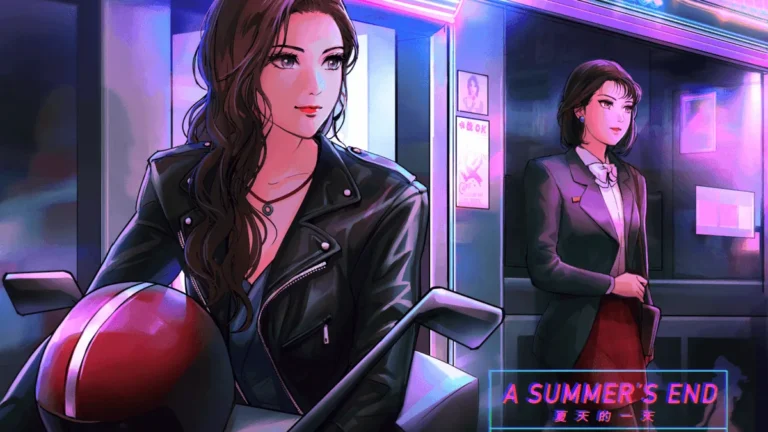
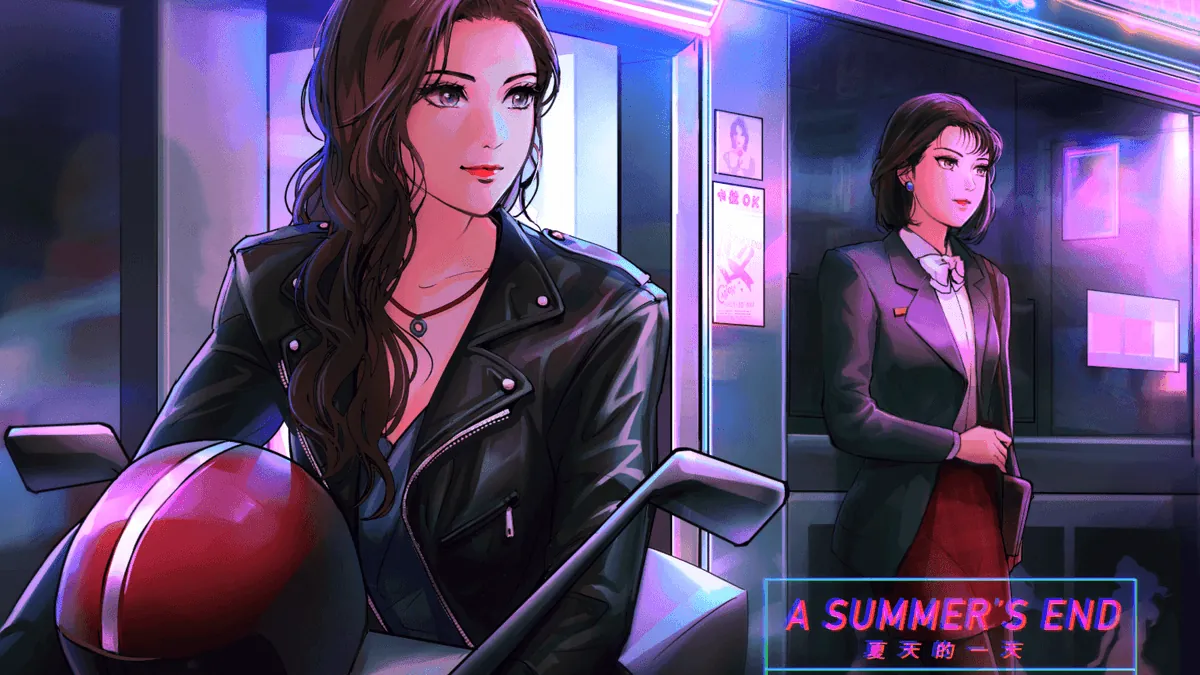
A Summer’s End – Hong Kong, 1986 stands as a remarkable visual novel that captures the essence of 1980s Hong Kong through its compelling narrative and stunning artistic presentation. This interactive story follows Michelle and Sam as their chance meeting blossoms into a deeper connection, exploring themes of identity, love, and cultural belonging in a rapidly changing world. The game combines authentic Hong Kong settings, hand-drawn artwork inspired by 80s anime, and an original vaporwave soundtrack to create an unforgettable experience. Whether you’re interested in narrative-driven games, retro aesthetics, or stories that authentically represent LGBTQ+ experiences in Asian contexts, this visual novel offers something truly special.
Story, Characters, and Narrative Experience
Remember that feeling of stumbling upon a story that feels both incredibly specific and universally true? That’s the magic of A Summer’s End – Hong Kong, 1986. This isn’t just a game you play; it’s a place you visit, a time capsule you open, and an emotional journey you undertake. At its heart, the A Summer’s End Hong Kong 1986 story is a masterclass in intimate, character-driven drama, weaving a visual novel romance narrative that resonates long after the credits roll. 🏙️💖
For me, what makes it so powerful is its commitment to honesty. It doesn’t just tell a love story; it builds a world around that love, with all its complications, joys, and terrifying risks. We get to walk alongside two women as they navigate desires that clash with tradition, futures that feel uncertain, and a connection that feels like coming home. Let’s pull up a chair at the Cha Chaan Teng, order a milk tea, and dive into the rich narrative tapestry of this acclaimed experience.
The Central Romance: Michelle and Sam’s Journey
The soul of this LGBTQ visual novel is, without question, the evolving bond between Michelle and Sam. This isn’t a whirlwind, fantastical romance. It’s a slow, cautious, and beautifully awkward burn that feels achingly real.
Michelle is our window into this world—a dutiful office worker living a structured, somewhat stifled life with her mother. Her routine is her armor. Then, one rain-soaked evening, Sam literally crashes into her life. 😄 Sam is the antithesis of Michelle’s order: a free-spirited, independent woman who runs her own video store, clad in denim and confidence. Their Michelle and Sam relationship begins as a series of hesitant, charged interactions. A returned umbrella leads to a movie recommendation, which leads to a tentative friendship.
The game’s brilliance lies in how it charts this character development visual novel fans crave. We see Michelle’s awakening not as a sudden revelation, but as a gradual unfurling. Through her internal monologue—filled with doubt, fascination, and repressed longing—we experience every flutter of confusion and clarity. Sam, while seemingly self-assured, has her own layers of vulnerability. Her bravado sometimes masks the loneliness of living outside societal norms, and her patience with Michelle’s pace reveals a deep empathy.
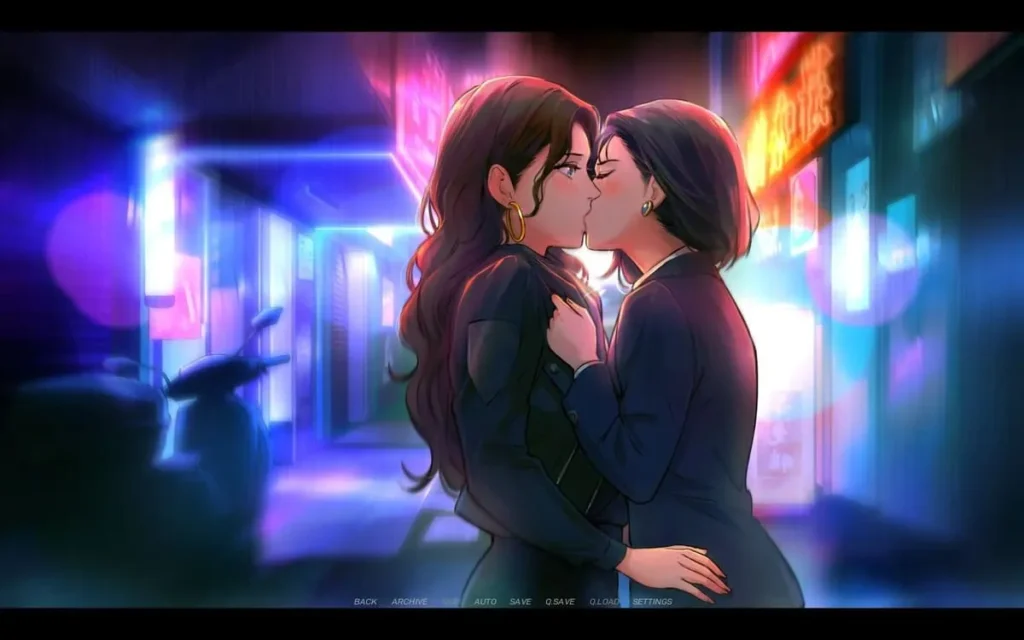
The optional adult content patch is worth mentioning here, not for sensationalism, but for how it services the narrative. When chosen, these moments are less about physicality and more about profound emotional vulnerability. They represent a point of no return in trust and intimacy, acting as the ultimate narrative payoff for the connection the game so carefully builds. It’s a testament to the writing that these scenes feel like a natural, earned culmination of their emotional journey.
“We wanted to portray a romance that was heartfelt and authentic, one where the struggle wasn’t about coming out in a grand gesture, but about the quiet, personal journey of accepting one’s own desires in a world that doesn’t make space for them.”
This quote from the developers perfectly captures the game’s sensitive approach. The visual novel romance narrative thrives on these quiet moments: the shared glances over a bowl of noodles, the nervous energy of holding hands for the first time, the comfort found in a silent car ride through the neon-lit streets. Hong Kong itself becomes a character in their romance, its bustling markets and tranquil rooftops providing the backdrop for their private world.
Supporting Characters and Relationship Dynamics
No relationship exists in a vacuum, and A Summer’s End expertly uses its supporting cast to apply pressure, offer perspective, and deepen the main conflict. This is where the A Summer’s End Hong Kong 1986 story truly grounds itself in a believable social fabric.
The most pivotal figure is Joey, Michelle’s well-meaning but hopeless suitor. 👨💼 He’s not a villain. In fact, he’s painfully nice—the kind of “good match” any traditional mother would dream of for her daughter. Joey represents the “expected path,” the safe, societally-approved future that Michelle is gently being steered toward. His presence isn’t about creating a love triangle with simple jealousy; it’s about highlighting the immense weight of obligation Michelle carries. Every interaction with Joey forces the player, as Michelle, to confront the gap between the life she’s supposed to want and the one she’s beginning to ache for.
Then there’s Michelle’s mother. She is the embodiment of the family conflict in games that the title explores. Her love for Michelle is undeniable, but it’s wrapped in generations of cultural expectation. Her hopes for her daughter—marriage, stability, grandchildren—are a language of care that Michelle hears as a demand. The tension at home isn’t dramatic shouting matches (at least, not always); it’s the heavy silence after a pointed question, the disappointment in a glance, the relentless, passive pressure of “when will you introduce us to a nice boy?”
Sam’s world, in contrast, is shown through her friends and community—a glimpse into a chosen family that offers acceptance. This dichotomy is crucial. Michelle is caught between her birth family’s world of unspoken rules and Sam’s world of potential freedom. The supporting characters act as anchors to these opposing shores, making Michelle’s internal struggle palpable and deeply relatable. You’re not just watching a conflict; through the game’s brilliant pacing and dialogue choices, you’re feeling the pull of both worlds.
Themes of Identity and Cultural Conflict
Beyond the beautiful art and synth-pop soundtrack, A Summer’s End* is a profound exploration of self-discovery against a specific cultural backdrop. It tackles the question: How do you find your authentic identity when it conflicts with everything you’ve been taught about family, duty, and love? 🤔
The game is set in 1986 Hong Kong, a place and time brimming with its own identity crisis—poised between British colonial rule and an uncertain future under China. This historical unease mirrors the personal uncertainty of the protagonists. The anxiety of “what will happen next?” to the city echoes the characters’ own questions about their futures. This parallel is never heavy-handed, but it adds a rich layer of texture to the story, making the A Summer’s End Hong Kong 1986 story a poignant historical snapshot as much as a personal one.
A central theme is the exploration of what it means to be gay in a conservative culture. The game wisely avoids broad stereotypes or exploitative tragedy. Instead, it shows homophobia as a pervasive, often casual force: in the assumptions of family, the gossip of colleagues, and the internalized fear the characters themselves must overcome. The conflict is less about violent bigotry and more about the thousand tiny cuts of misunderstanding and expectation. This makes the story’s emotional impact more nuanced and, for many, more familiar and painful.
The family conflict in games is portrayed with remarkable sensitivity. It’s not about painting parents as monsters, but about illustrating the heartbreaking chasm that can open between love and understanding. Michelle’s desire to be a “good daughter” is at war with her need to be her true self. The game asks whether honoring your family means living a lie for their comfort, or if true honor can sometimes mean pursuing your own happiness, even if it causes temporary pain.
This brings us to the pivotal game endings choices. Your decisions, often subtle and dialogue-based, guide Michelle’s courage and conviction.
- The “Stay” Ending: Choosing the path of least resistance, influenced by fear and duty, leads to an ending where Michelle succumbs to societal and familial pressure. It’s a poignant and heartbreaking conclusion that shows the cost of self-denial. The relationship with Sam dissolves into a bittersweet “what could have been,” a ghost that will haunt Michelle’s conventional life.
- The “Leave” Ending: This is the path of courage and self-affirmation. By consistently choosing honesty—with herself and with Sam—and finding the strength to confront her fears, Michelle chooses love and authenticity. This ending is hopeful and uplifting, but not unrealistically fairy-tale. It acknowledges the difficult road ahead with Sam, but faces it with solidarity and hope.
A perfect example of how these choices work is the decision at the restaurant with Joey and Sam. When Joey makes a subtly dismissive comment and Sam gets up to leave, you have a split second to decide: Do you stay seated, preserving the uncomfortable peace? Or do you follow your heart and stand up to follow Sam? This single choice isn’t just about politeness; it’s a powerful metaphor for choosing between the expected social script and the daring, authentic act. It’s a microcosm of the entire game’s conflict, and it significantly steers you toward one of the two final outcomes.
| Ending Name | Core Theme | Key Player Choice Influence |
|---|---|---|
| The “Stay” Ending | Duty, Sacrifice, Melancholy | Prioritizing family approval and social comfort over personal truth. Avoiding difficult confrontations. |
| The “Leave” Ending | Courage, Authenticity, Hope | Choosing honest dialogue, supporting Sam openly, and confronting familial expectations. |
The inspiration from 80s Hong Kong cinema and anime is felt in every frame—from the dramatic use of color and shadow to the nuanced portrayal of everyday life with a poetic sheen. It draws from the melodrama and emotional depth of the former and the character-centric storytelling of the latter, creating a visual and narrative style that is entirely its own.
Ultimately, the A Summer’s End Hong Kong 1986 story offers a narrative experience that is both a tender love letter and a courageous statement. It validates the quiet struggles of finding oneself and argues powerfully for the beauty of choosing love, in all its forms. Its character development visual novel mechanics make you an active participant in that journey, ensuring that the emotional payoff—whether joyful or melancholic—is one you feel you’ve earned. It’s more than a game; it’s a beautifully rendered, deeply human story that stays with you, a perfect echo of a summer that changes everything. 🌆✨
A Summer’s End – Hong Kong, 1986 represents a thoughtfully crafted visual novel that succeeds in multiple dimensions. The game delivers an engaging romance narrative between two compelling characters while authentically exploring the complexities of identity and belonging in 1980s Hong Kong. Its artistic direction—combining hand-drawn aesthetics inspired by 80s anime with meticulously researched Hong Kong locations—creates an immersive retro atmosphere that appeals to players seeking both visual beauty and narrative depth. The interactive gameplay mechanics, including the choice-based system and point-based unlocks, encourage multiple playthroughs and allow players to shape their own experience. Whether you’re drawn to the game for its authentic representation of LGBTQ+ experiences in Asian contexts, its stunning visual design, its evocative soundtrack, or its compelling storytelling, A Summer’s End offers a memorable gaming experience that respects its audience and subject matter. For anyone interested in narrative-driven games that blend cultural authenticity with artistic excellence, this visual novel deserves your attention.