Healslut
Play Healslut
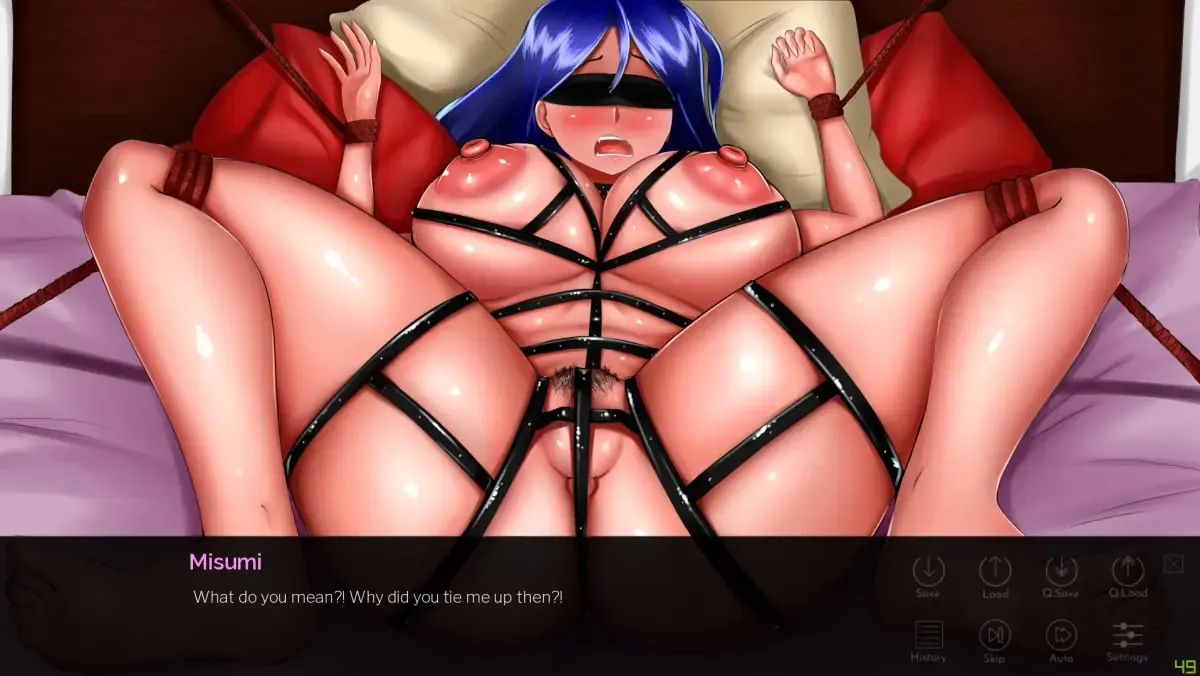
Healslut Screenshots







Healslut review
Exploring the intersection of healing roles, community culture, and innovative game design
The Healslut game represents a unique intersection of gaming culture, community-driven design, and innovative mechanics that challenge traditional role-playing conventions. Originating from dedicated gaming communities, this title has evolved into a fascinating case study of how players reimagine and recontextualize established game mechanics. Whether you’re a curious gamer, a game designer studying community engagement, or someone interested in how niche communities shape gaming experiences, understanding the Healslut game provides valuable insights into modern gaming culture and player creativity. This comprehensive guide explores the game’s mechanics, community foundation, and what makes it a distinctive phenomenon in contemporary gaming.
Understanding Healslut Game Mechanics and Design Philosophy
Let’s be honest, if you’ve ever mained a healer in a team-based game, you’ve probably had this thought: “Why am I just a health vending machine?” 🫠 You’re stuck in the backline, frantically clicking on green bars, watching everyone else have all the fun with flashy kills and big plays. Your impact feels indirect, your glory is borrowed, and your gameplay loop can become… well, a bit of a chore.
What if healing wasn’t just about maintenance, but about active creation? What if your role as a support was the central engine for your team’s strategy, style, and even personality? This is the fundamental question that powers the innovative Healslut game mechanics. It’s not just another team shooter; it’s a complete reimagining of the support character design paradigm, turning passive aid into the most dynamic role on the battlefield.
Core Mechanics: How Healing Roles Transform Traditional Gameplay
At its heart, this game asks a revolutionary question: what if a healer’s power wasn’t limited to fixing damage, but could instead rewrite the rules of engagement? Traditional games treat healing as a reactive, numerical task. This game treats it as a proactive, strategic language.
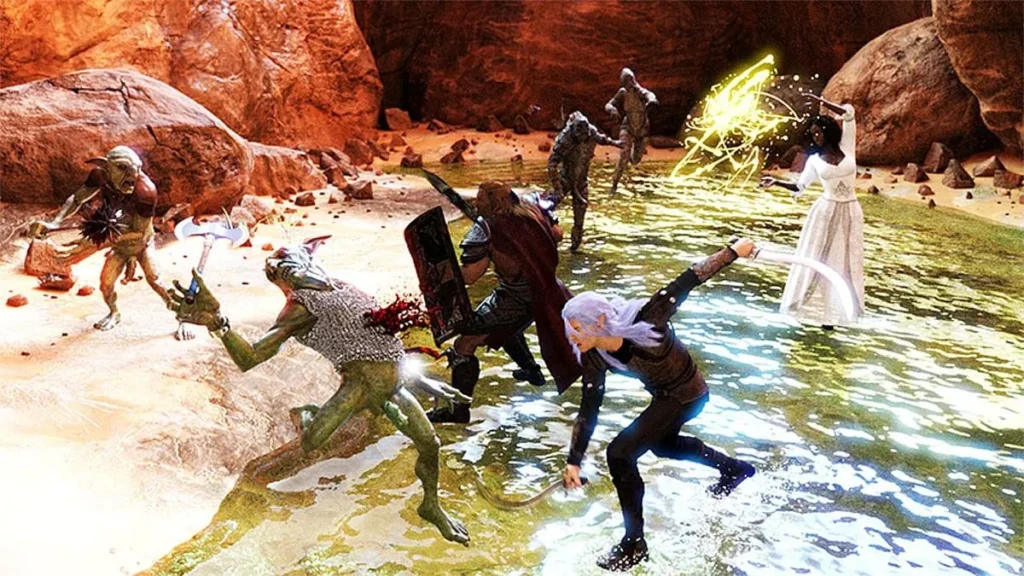
The core loop flips the script. Instead of simply topping up health, your abilities as a support actively alter states, create opportunities, and impose new conditions. Imagine landing a heal that doesn’t just restore HP, but briefly grants your ally a damage-reflecting shield. Or using a cleansing wave that removes negative effects from friends and applies a short-duration slow to nearby enemies. Every action is a dual-purpose tool, blending support with soft crowd control or tactical buffs.
This creates a fascinating shift in healing role gameplay. You’re no longer just watching health bars; you’re reading the flow of battle like a conductor. Is your frontline brawler about to dive? Your “heal” can now be a speed boost to get them in, coupled with a minor damage amplification. Is an enemy trying to flee? Your follow-up ability could be a tethered link that siphons their speed to your chasing teammate. The Healslut mechanics explained here are all about synergy and transformation.
To see this shift clearly, let’s look at how these innovative healing systems stack up against the old guard.
| Aspect of Play | Traditional Healing Mechanics | Healslut Game Innovations |
|---|---|---|
| Primary Objective | Maintain team health above zero; reactive damage mitigation. | Enable and empower specific team actions; proactive opportunity creation. |
| Player Role Perception | Essential but passive “babysitter” or “medic.” | Active “tactician,” “enabler,” or “orchestrator” of combat flow. |
| Key Interaction Model | Binary: Target ally -> Apply heal. Limited strategic dialogue. | Conversational: Choose effect -> Trigger ally bonus -> Alter enemy state. Rich strategic dialogue. |
| Resource & Cooldown Focus | Managing mana/energy for efficient healing output. | Managing “Influence” or “Resonance” to layer synergistic effects at critical moments. |
| Team Dynamic | DPS/Tank are stars; Support is the safety net. | Support is the catalyst; team compositions are built around support effect combinations. |
This table highlights the seismic shift. You’re managing a new kind of resource—let’s call it “Synergy Charge” for argument’s sake—that builds not just by passing time, but by successfully landing your dual-purpose abilities. This directly answers how does Healslut work on a fundamental level: it turns every support action into a building block for a greater combo, rewarding foresight and timing over sheer reaction speed.
Design Philosophy: Reimagining Support Character Dynamics
The mechanical overhaul is just the toolset. The real magic is in the game design support roles philosophy that asks: “Who is this character, and why do they fight this way?” 🎭
In many games, a healer’s backstory is often separate from their gameplay—a kind priestess who, in battle, just shoots green beams. Here, character fantasy and mechanics are inseparable. A support who manipulates botanical life isn’t just “healing”; they are entangling enemies with roots while causing healing blooms to erupt from the ground where allies stand. Their kit tells their story through play.
This philosophy empowers incredible support character design. Let me share a personal experience from a playtest session that opened my eyes. I was playing a support themed around celestial bonds and cosmic fate. One of my core abilities, “Symbiotic Destiny,” didn’t heal directly. Instead, I could tether myself to an ally for a few seconds.
During a crucial point capture, our tank was about to initiate. I preemptively tethered to him. As he crashed into the enemy line, the tether did two things: it absorbed a percentage of the damage he dealt and converted it into a healing aura around me, which then healed our flanking damage dealers. Furthermore, if the tether lasted its full duration, it burst, applying a vulnerability debuff to all enemies he had struck. My single decision—who to tether and when—created a cascading effect: empowering the tank’s engage, sustaining our backline, and setting up the enemy team for a wipe.
This is the design philosophy in motion. My value wasn’t in raw healing numbers at the end of the match (though they were decent). My value was in being the linchpin of the combo. I felt like a master strategist, not a repair technician. This approach to healing role gameplay makes every match a unique story co-authored by you and your team, where your choices as a support directly script the dramatic turns.
The philosophy extends to progression. Instead of just unlocking stronger heals, you unlock new applications for your core abilities. Do you specialize your celestial tether to provide more personal damage resistance, or do you branch it to allow the healing aura to also cleanse negative effects? Your build defines your playstyle and, by extension, your team’s strategy. This level of player agency and creative interpretation is baked into the Healslut game mechanics from the ground up.
Player Agency and Creative Interpretation in Game Systems
This is where the game truly sings. By providing a toolkit of transformative, non-binary abilities, it invites players to define what support means to them. The systems are designed to be read, interpreted, and exploited in diverse ways. This isn’t about finding a “meta” build; it’s about finding your build.
The game design support roles here function as a framework for expression. Let’s break down how this agency manifests:
- Composition Catalyst: You don’t just fit into a team comp; you inspire it. A support who excels at creating explosive area-of-effect synergies might encourage picking heroes with big, telegraphed ultimates. A support who specializes in sustained, single-target empowerment becomes the perfect partner for a mobile duelist. You are the first piece of the puzzle around which the team is built. 🧩
- Moment-to-Moment Creativity: Because your abilities have layered effects, their optimal use is rarely obvious. Do you use your “Restorative Wave” now to save a low-health ally, or do you hold it for two more seconds when the enemy debuffer attacks, using it to cleanse and heal simultaneously for maximum value? This constant, contextual decision-making is the soul of innovative healing systems.
- Building a Personal Legacy: Your profile won’t just track your win rate or healing-per-minute. It might track unique metrics like “Synergy Triggers Activated” or “Game-State Alterations.” You’re rewarded for creative play that leverages the system’s depth, not just for efficient button-pressing.
This relationship between rigid mechanics and fluid interpretation is key to understanding how does Healslut work at a community level. The game provides the grammar—the verbs (buff, cleanse, tether, convert) and the nouns (ally, enemy, area). The players write the poetry. One player might use a kit to be an aggressive, front-line enabler, soaking up attention while empowering their brawler. Another might use the exact same kit to be a delicate, backline conductor, carefully orchestrating strikes from a distance.
This level of player agency and creative interpretation ensures the Healslut game mechanics remain fresh and deeply engaging. It acknowledges that the most compelling game systems are those that players can make their own, finding strategies and styles the developers might never have predicted. It turns healing role gameplay from a prescribed duty into a form of strategic self-expression, proving that the most powerful thing you can bring to a team isn’t just healing—it’s vision. 💡
Ultimately, this exploration of mechanics and philosophy reveals a game that does more than innovate; it respects the intelligence and creativity of the player behind the support role. It challenges the stagnant tropes of support character design and offers a vibrant, dynamic, and profoundly impactful alternative. By focusing on transformation over restoration, on conversation over monologue, it doesn’t just change how you play a healer—it changes how you see the entire battlefield.
The Healslut game stands as a compelling example of how gaming communities can creatively reimagine established mechanics to create meaningful and engaging experiences. By transforming traditional support roles into something entirely new, the game demonstrates the power of player agency and collaborative design. The community that has grown around this title showcases how niche gaming experiences can foster genuine connections and provide spaces for diverse expression. Whether you’re drawn to innovative gameplay mechanics, interested in community-driven development, or curious about how modern gaming culture evolves, the Healslut game offers valuable lessons about creativity, player empowerment, and the future of interactive entertainment. As gaming continues to evolve, titles like this remind us that some of the most compelling experiences emerge when communities take ownership of their gaming narratives and push creative boundaries.